
Silicone Ball — Material Specifications, Engineering Data & OEM Supply
Engineered by HEMSUN ENGG. INDUSTRIES, Silicone Ball is designed for demanding valve, pump, and mechanical sealing duties. Built from high-purity engineering fluoropolymer to withstand temperatures from -200°C to +260°C with zero chemical degradation in harsh media.
Where Silicone Ball is used
Sealing and flow-control element in ball valves and pump check seats, where sphericity and surface finish decide shutoff tightness and operating torque.
Selected for wide-temperature and food-contact duty where flexibility must survive both low temperature and dry heat.
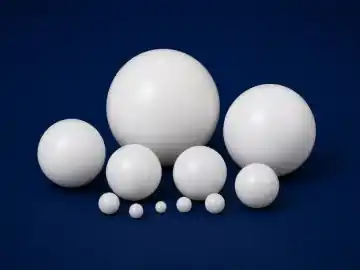
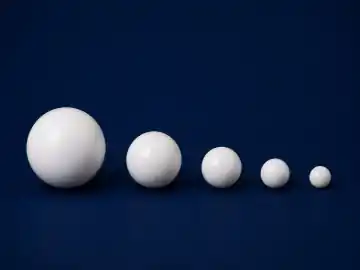
Supplied to drawing across the published range — Diameter
5mm to 310mm — industry-leading Silicone Ball size range; Material: Silicone Rubber (VMQ / Silicone Elastomer) — with dimensional and material reports on request.
Key properties
Diameter
5mm to 310mm — industry-leading Silicone Ball size range
Material
Silicone Rubber (VMQ / Silicone Elastomer)
Grade
ISO 3290 Grade G10 precision
FDA-compliant
food, dairy, pharma and medical device safe
Completely tasteless and odorless
zero contamination
Outstanding high temperature resistance
up to +230°C
Excellent low temperature flexibility
down to -60°C
Temperature range
-60°C to +230°C
Weatherability
UV and ozone resistant
CIP and SIP compatible
fully sterilizable
Non-toxic
medical grade available on request
IEC registered
export-ready quality
Specifications
| Property | Value |
|---|---|
| Component Type & Grade | Silicone Ball (Specification Code HES-426) |
| Base Raw Material | engineering fluoropolymer (Virgin FDA 21 CFR 177.1550 / Custom Filled) |
| Continuous Service Temp. | -200°C to +260°C (-328°F to +500°F) |
| Tensile Strength at Break | 20 to 35 MPa (Virgin) / 14 to 25 MPa (Filled) |
| Elongation at Break | 250% to 450% (ASTM D4894) |
| Specific Gravity / Density | 2.14 to 2.18 g/cm³ (ASTM D792) |
| Dielectric Strength | 50 to 80 kV/mm (0.1 mm film) |
| Surface Roughness Finish | Diamond Polished Ra ≤ 0.20 µm to Ra ≤ 0.40 µm |
| Dimensional Tolerance | ISO Grade 1 to Grade 3 / Drawing Nominals (±0.02 mm) |
| Manufacturing & Origin | Moulded, Sintered & CNC Machined in Dahegam, Gandhinagar, Gujarat, India |
Manufacturing process
The manufacturing process for Silicone Ball utilizes precision cold preforming of engineering fluoropolymer followed by oven sintering. Automated hydraulic press cycles ensure consistent green compact density, which prevents localized voids and ensures uniform thermal expansion behavior during finish machining passes.
Material selection notes
Engineered from high-purity engineering fluoropolymer, this component resists virtually all industrial acids, alkalis, and aggressive organic solvents. The non-stick, self-lubricating surface minimizes drag and prevents material buildup in fluid handling systems. Compressive deformation under load is optimized through tailored filler grades based on service pressure.
How to specify your order
To configure Silicone Ball for your application, submit component dimensions, operating PV factors, and delivery port requirements. Our engineering team prepares complete technical evaluations and formal quotations within 24 hours.
Quality checks and inspection
Testing procedures for Silicone Ball include optical comparator profile inspection, hydrostatic pressure holding tests on seal components, and material hardness checks (Shore D) to verify full sintering cure.
Ordering and export documentation
Domestic Silicone Ball orders ship with GST invoice and e-way bill where applicable. Export orders include commercial invoice, packing list, and certificate of origin from our IEC-registered works. Material certificates and dimensional reports attached for qualified pharmaceutical and OEM shipments Contact info@hemsun.com or sales@hemsun.com with your balls specification.
Export packing and lead time
Export logistics for Silicone Ball cover global delivery via air freight or ocean container through Mundra and Nhava Sheva ports. Products are packed with protective foam wrapping and moisture-barrier film inside export-grade wooden crates, accompanied by certified commercial invoices and Certificates of Origin.
Storage and handling
Installation best practices for Silicone Ball: Verify housing bore chamfers (15° to 30°) prior to insertion to prevent seal shearing. Store unused inventory in original packaging in a dust-free storage area.
Compliance & Standards
HEMSUN is a DGFT IEC registered exporter (Government of India). Diameter and sphericity are verified on calibrated gauges and the achieved grade is recorded on the inspection report; sintered density is checked per ASTM D792. A mill test certificate ships with the order. Export paperwork — commercial invoice, packing list and certificate of origin — accompanies international despatch.
Frequently Asked Questions
What is the largest Silicone Ball you manufacture?
We manufacture Silicone Rubber Balls up to 310mm diameter. Large Silicone Balls serve large-bore food processing and pharmaceutical pump check valves.
Are Silicone Balls FDA compliant for food and pharmaceutical contact?
Yes. Our Silicone Balls are manufactured from FDA 21 CFR compliant Silicone rubber compound — non-toxic, tasteless, odorless, and safe for direct contact with food, beverages, dairy products, and pharmaceutical media. CIP and SIP sterilizable.
What temperature range can Silicone Balls withstand?
Silicone Balls operate from -60°C to +230°C — the widest temperature range of any rubber ball material. This makes them suitable for both frozen food processing (low temperature) and high-temperature baking, food sterilization, and industrial hot liquid dispensing applications (up to +230°C).
Related Machinery, Tooling & Technical Guides
Manufacturing Presses
Engineering Process Guides
Related Products
Related Articles

Can PTFE Balls Be Used in Drinking Water Systems?
View DetailsChoosing the Right Ball Size for a Check Valve
View Details